SUBSTACK / 29 SEPTEMBER 2025
I'M GON' GOCALL MY CREW,YOU GO CALLYOUR CREW.WE CAN RENDEZVOUSAT THE READING AROUND 2
(Come on)
- Published
- 29 September 2025
- Form
- Essay
- Subject
- CanLit insecurity
LITERARY FICTION / SLAM POETRY / CLOUT / INSECURITY
I’ve been mean girl’d twice at literary events, and both times it was a slam poet. That means nothing in the grand scheme of things, since two nasties don’t define a community. But it’s got me thinking about who the lit snobs really are around here. I don’t think it has as much to do with genre as it has to do with insecurity.
I’m technically in the literary fiction game, maybe a little more upmarket these days. I’m not going to explain what that means since Substack has discoursed literary categories into the damn ground. My prose isn’t flowery, and people often classify it as working-class, which is a polite way to say, not as erudite as the rest of us but good to have around because it makes us feel gritty. This is a little bit irreverent but also a little true. CanLit generally prefers its man-writers to be gritty and working-class, but I’m gradually claiming my territory.
I do not go walking around patting myself on the back for being a (gritty) literary writer. I certainly don’t walk around feeling superior to writers who have made different choices, to write genre fiction or, say, slam poetry. Some writers do. Some have even published bitchy articles questioning the worthiness of slam poetry. I know I read at least one between 2015 and 2019—when this conversation first came to my attention—though Google isn’t offering up any. It did offer up this rather circuitous essay by “poet, educator, producer, academic, and dancer” Katie Ailes on why slam poetry is not a genre. Looking through her sources I spotted a familiar name. A man I’d watched shout in the face of a (very) young woman who gave him a score he didn’t like at a slam.
Jackasses who are now well-paid arts administrators aside, there was also the fact that very few slam poets were invited to literary festivals (in my neck of the woods, anyway) or able to get writing grants or fellowships, or publish books. My impression is that things have changed for the better—and mostly due to the work of the poets themselves—but I’m not part of that community so it’s not my place to say. Slam poets have been called upon to do things like open the 2010 Olympics in Vancouver. So, okay.
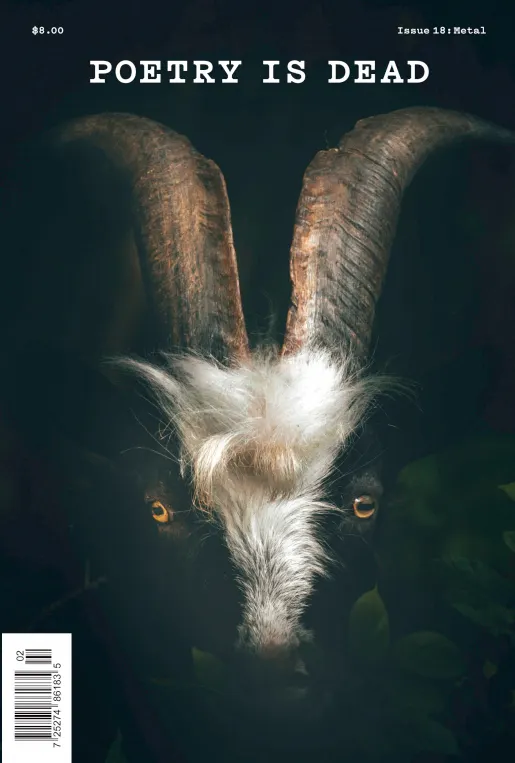
The first time I was mean girl’d at an event I was walking onstage to perform. So that was awkward. To be fair, this was was not my usual crowd. It was the realm of the slam/ spoken word poets and most people who took part were from that community. The organizers chose an album (ours was Metallica’s And Justice For All), a group of musicians learned the songs, and poets read pieces that responded to the music. I’d been asked to participate because people knew I loved metal. I edited the Poetry Is Dead metal issue. I think that was why, or maybe it was because I’m Indigenous and therefore a good DEI hire. Whatever the reason, I put aside worries about my own poetry, which did not have the style and cadence of spoken word poetry. I wrote about Link Wray, father of distortion and sometimes referred to as father of metal although Wray himself was very modest about that.
At the event, the crowd and performers were loudly supportive of each other, really friendly with each other, and I was a little jealous of all the camaraderie. But then it was my turn, and I stepped on stage to scattered applause. Did this conspicuously selective support happen at the events I was used to attending? Maybe it did and I’d never noticed?
The band had just played my song of course. The lead singer sat down a few feet from me. When I thanked them, they looked right in my eyes and said nothing. Assuming I had misinterpreted this body language (as I often do) I did a little opening patter about Link Wray to a quiet audience and looked back at the singer, who was now glaring (maybe?) at me, and asked if they knew who Link Wray was. To my horror, they said nothing. The event organizer had to step up behind them and offer a hearty, “of course we know Link Wray!” so I could continue with a little dignity, at least. I guess it went fine, but I sculled my drink and left right afterwards.
What happened? I don’t know. And although I laugh about it now (what else can you do?) I decided to never perform at another spoken word/ slam event ever again. Performing live invites enough self-recrimination!
That was years ago. I was at a festival more recently, and lo, it happened again, and with another slam poet. But this time there were several uncomfortable days to spend together.
Our initial in-person meeting was almost absurdly nasty, like it had been written by E.L. James. “And your name is?” (there were only four of us on the bill and we’d been introduced via email) (also, who says that IRL?) followed by, “Oh yes, I think we’ve heard your name before.” Who is “we,” I wondered. The answer was coming. I sputtered, “Yeah, I’m giving the keynote,” and immediately worried that I was the one being a snob!
We filed into a little, hot theatre. With her back to me, she kept referring to another presenter as the keynote speaker, even offering to write KEYNOTE SPEAKER above this other performer’s name on the whiteboard behind us. A few people, including the other performer, pointed out that I was the keynote speaker. She offered to write it up there anyway.
What the hell was happening? Why was this a thing? The audience was already seated by the way. They got to watch this performance. And it went on—just like the And Justice For All night, she was loudly and effusively supportive of the two other (brilliant) presenters. I don’t need to be hooted at. I like it, but I don’t need it. But how had it taken five minutes for me to become the odd man out in this situation? A new record. I won’t bore with you with details, but being the odd man out is kind of my lifetime steez, and I hate it. I probably bring it on myself by being a hermit. Time to go back to the therapist!
I’m sorry to say that the situation never resolved itself, partly due to the fact that my advancing ascendance to middle-aged-ladyhood has decimated my poker face. It wasn’t great to begin with but now it’s obvious if I think you’re being a jerk. But ascendence takes a while so I still find myself stewing about the situation and trying to tie it to a bigger social dumpster fire. And in this case, I think that may be the dumpster fire of CanLit insecurity.

I’m talking a lot of different fires here, for a lot of different insecurities. But I’m going to focus on one. Writers in Canada depend pretty heavily on an arts grant system in order to pay the rent while working on a book. Some don’t, some own their own homes and cars and have savings and/or tenured positions at universities and still apply for grants—for clout I guess? They do confer a kind of clout—a lot of clout actually since only a small percentage of applicants receive one. You thank the granting organizations on your posters and in the acknowledgements section of your book and pray that this sways a literary award juror to consider your book a little longer before tossing it on the NO pile. Anyway, it’s a huge relief to get one if you’re not particularly money’d, and for a long time it was impossible to qualify for funding without a list of published works.
This was an obvious hurdle for spoken word poets and other oral storytellers since they often weren’t looking to publish, and many journals were uninterested in publishing spoken word. So it was possible to have written and performed hundreds of poems and still not qualify for a grant. I also want to say that I’ve sat on many grant juries over the last fifteen years and it also was a very long time before genre writers of any variety got a seat at the gatekeeping table, even though they qualified for the grants. A jury of two (literary) novelists, a (literary) poet, and one (literary) essayist should have been open to funding a book about a hardboiled detective, or renegade androids, or space pirates, but they often weren’t. Lit writers can moan and whinge about integrity of the form or quality of the writing, but plenty of mediocre literary books have been funded over the years. And plenty of genre or upmarket books are superbly written.
Whether or not you think this is fair and/or justified, it sends a message to a certain kind of writer that they don’t get to access this clout. And in Canada’s teeny-tiny little market, where only select writers get the opportunity to push out (successfully) in the international markets, clout looms over us, it decides who goes to the festivals, who gets reviewed, who gets celebrated. Sometimes a humble, locally-published book breaks through and impresses everyone, and a writer soars from cloutless wonder to clout-daddy in weeks. But then the clock starts ticking, will their next book be as clout-inducing? Enjoy writing with that hanging over your head, asshole!
I’m being a little reductive for (dark) humour’s sake and I hope that’s obvious. Writers in Canada are always talking about the granting system and how it could be better. I’m not positive Big Grant is listening, but I have the impression that they are. Unfortunately, after a pretty fat decade, arts funding is also going through a period of insecurity. There’s not as much money available, and many journals, festivals and reading events have pared down or disappeared. Generally the old, institutional places get all their grandfathered funding and the cool and exciting new-ish stuff gets yoinked. So, just like every other good thing in this hellscape timeline, the future of writing is also uncomfortably liquid. I am not ringing a death knell. I’m just saying that it’s harder to exist when you’re feeling insecure.
So what do you think, Reddit, is insecurity fuelling the mean girls, or AITA? You only ever get one side of the story in this kind of rant. I don’t actually care what the truth is, I just take comfort in narrativizing away somebody’s unexplainable behaviour.