SUBSTACK / 08 OCTOBER 2025
WRITINGINTHEMES
Discourse really did a number on us, hey?
- Published
- 8 October 2025
- Form
- Essay / craft
- Place
- York University
DETAIL / CHARACTER / IMAGERY / MESSAGE
I’m the fall/winter Writer-in-Residence at York University in Toronto. Talking to young writers always tops up my optimism but faculty bureaucracy drains it, so a WIR position is a real gift. All of the former and none of the latter. The York profs boasted about how sharp and engaged the students are, and they weren’t exaggerating. I know the whole student teaches the teacher thing is cliché, but it’s cliché because it’s true.
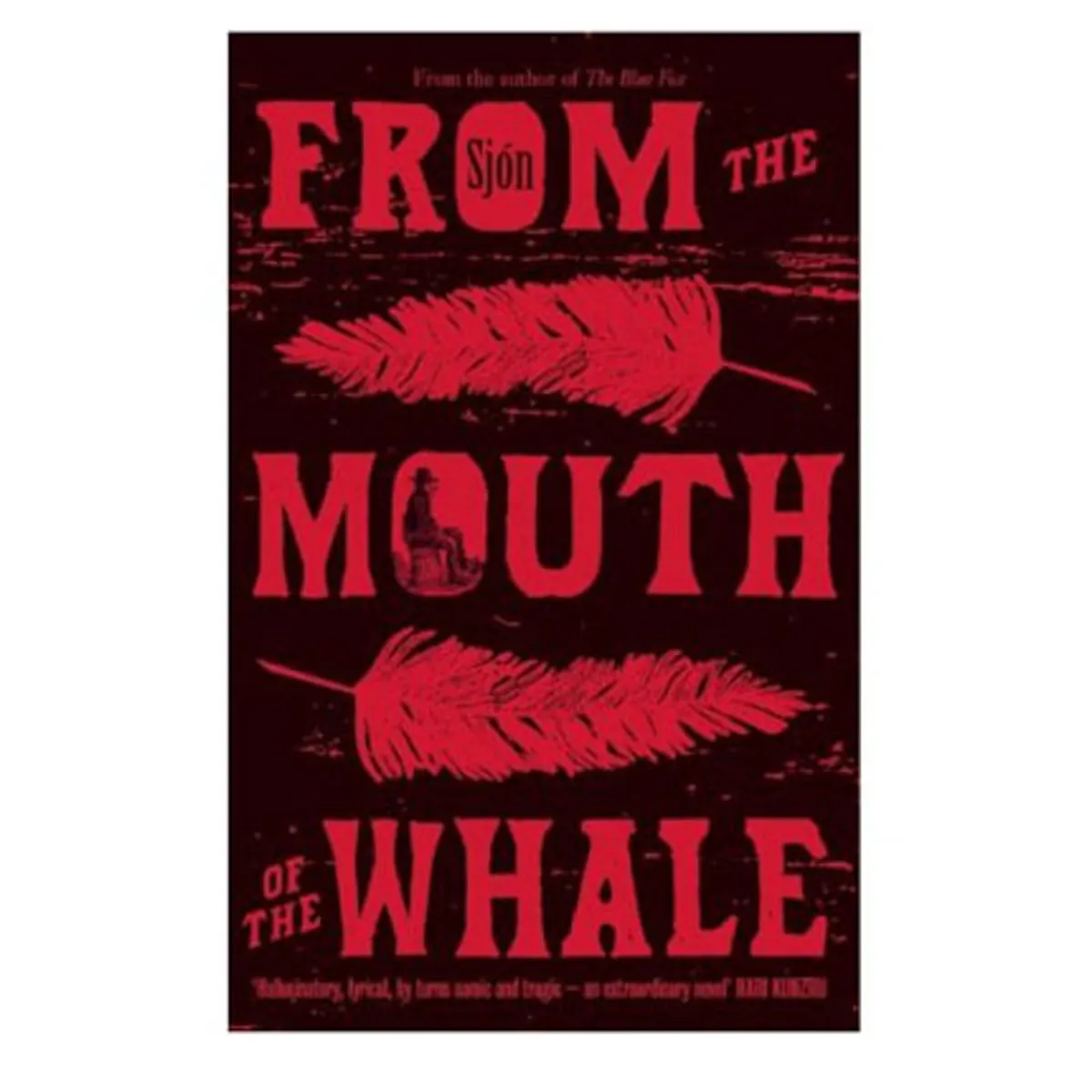
I had a great conversation with a student last week. They’d sent in a beautiful, nascent piece of writing, reminiscent of Sjón’s From the Mouth of the Whale (trans: Victoria Cribb) I thought. A personal fave that took me six times to finally get into, and is now a seasonal re-read. It’s a contemporary take on an Icelandic Saga. Set in 1635, a time when medicine and science still looked a lot like magic. The protagonist, Jónas Pálmason (Jónas the Learned) is a weird healer—both big brained and mad. The least reliable narrator I’ve ever encountered. So much of the story is his fever dream, to the point where our grip on this world’s reality is eventually lost and who cares about reality anyway. The natural world (as described by Pálmason) eventually takes precedence over the narrative. There’s an incredible scene where Pálmason describes the sound of the ocean crashing through a series of caves that is so good, I copied it out by hand and mailed it to a guy I had a crush on at the time. If you know how terrible my handwriting is you’ll understand what a feat that was.
It was Sjón’s ability to describe things in such visceral, stunning detail (those common words don’t do his skill justice but I’ve only had one cup of coffee) that I had in mind when I sat down with the student. I won’t get into specific detail but they had submitted a fantasy story and wanted to know how to make it fuller and more engaging. I had a series of questions about their writerly intentions. They had detailed answers for everything. When if comes to drafting, I don’t even know why I’m doing what I’m doing much of the time. This student had really thought things through.
I also noticed that their answers all pointed to the same intention—to communicate the story via themes and messaging. Questions like, “Tell me exactly what is happening in this scene,” didn’t elicit a discussion about character intentions or imagery. Instead we talked about what the thematic message to readers was. What each scene meant literally. They’d done tons of research and months of thinking and were very focussed on what they wanted to say.
“Ok!” I said. “Understandable, and frankly, commendable!” But what was happening on the page took us a little longer to get into. What places and people looked like. What the relationships between the characters were. This isn’t a criticism. We all have our narrative pipelines when imagining and drafting a story. Some go from a memory to story, some go from setting/place to story, some start with a character. Message/teaching to story is common as well, but a potential risk is that a writer will become so focussed on what they want to teach that they ignore the beautiful (and necessary) details. Some writers (me included) find abundant description tiresome—to read and to write. What really helped me was understanding that carefully curated details add to plot and character development (and message!) while building a mental movie for readers. So that’s what we talked about.
As I sat in my expert’s chair, delivering the conventional wisdoms that had once been delivered to me and will continue ad infinitum, I realized that this was a bit of a “do as I say, not as I do,” situation. As far as my last book is concerned, anyway. A short story collection that poured out of me after a long and uncomfortable period of writer’s block (I do not give a fuck if you think writer’s block is real.) When I finally came back, full of unholy fire, I wanted to talk about climate change, fears for my aging parents, billionaires, loneliness. I wanted to talk about unlivable cities. My first collection talked about some of these things, but most of the stories were very personal. They came to me as memories of conflict—weird exchanges with friends, overheard arguments, or apocalyptic relationships. Feels a bit navel-gazey now, but readers generally liked it.
In my second collection, I stepped on the soapbox unabashedly, fully aware that conventional wisdom warned against authorial intervention. I wasn’t going to break the rule, I was going to incinerate it. Why? Because I was full of rage and fear about the state of the world, and desperate times called for desperate measures. I was also full of perimenopausal rage but didn’t realize that yet.
But there’s something else, something I’d also been thinking about constantly but somehow didn’t piece together until my conversation with this student. Online discourse gestures vaguely at internet would have us believe that everything we say needs to have an agenda. It’s all a big debate (my god, how that word’s meaning has denatured!) in the hellscape of ideas and what is the point of speaking up unless you’ve got some sort of lifehack. The world is burning so we must all be philosophers and political analysts and psychologists and journeyman economists. In my community, some writers handle this heavy expectation beautifully, some ignore it (and in turn are politely ignored), some juggle on and off-the-page activism, and in a sad but not surprising turn of events, some have reinvented themselves on an x-treme expertise spectrum that runs from omnipresent everyaunty to transcendant podcast cultrepeneur. These final forms are a blend of good intentions, desperation, and colossal egotism in my opinion but maybe I’m not being generous enough. Since most of them are bullies, I don’t care.
In the intermedial zone are the writers who want to imagine and create but also want to help. Some (me) do not feel comfortable in the role of socio-political expert. In fact, over the last decade I’ve only become more acutely aware of how much I don’t know about gestures vaguely again. When I got on that soapbox to write my second story collection the plan was to reflect the world I saw. I wanted readers to feel less lonely. My own egotism took hold when I decided that the mission was more important than the frills. The stories aren’t barren but they are minimalist. And furious. And ham-fisted at times—a choice which felt organic to the present (entirely unsubtle and rather stupid) moment. Not gonna lie, I love those stories. We’re not supposed to say that out loud but I do. I also think there’s something to learn from the process and the outcome.
So there I was, telling a student to really get into the story, look around in that world they were building and tell us what they saw. Have some fun, I told them. Create! Worry about the message later. And they liked this advice. Little did they know, I needed to hear it too.
A much-discoursed writer recently said that he was worried about his students’ unwillingness get excited about their writing. He blamed “cringe culture” and said that they were too worried about being judged by their fellow students to really put themselves out there and take risks. He’s not the only one, and if you spend any time in online discussion forums you will eventually find a refrain of, “it’s not that deep” responses to comments that offer thoughtful social analysis of film or literature or music. Infuriating, I admit. But also, evergreen. Kids were out-slouching each other long before the internet. I have yet to see this sentiment expressed among students in real life, face to face conversation. And while I’m not denying it exists in the corporeal world, I’m just saying that there’s more at play than fear of cringe. Discourse has changed how we communicate, and how we value art. Is it saving the world? No? Then how valuable can it be really? Absurd when you think about it but here we are. This belief could use a little massaging. I would offer you a solution, but my omnipresent everyaunty card is in the mail.